
Excelsior Vintage Tires

FEATURED NEW PRODUCTS


-
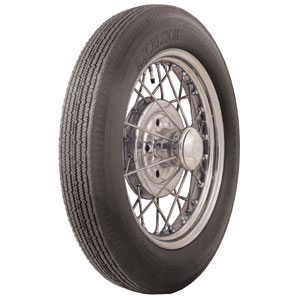 Excelsior All Black | 525/550-18$172.00


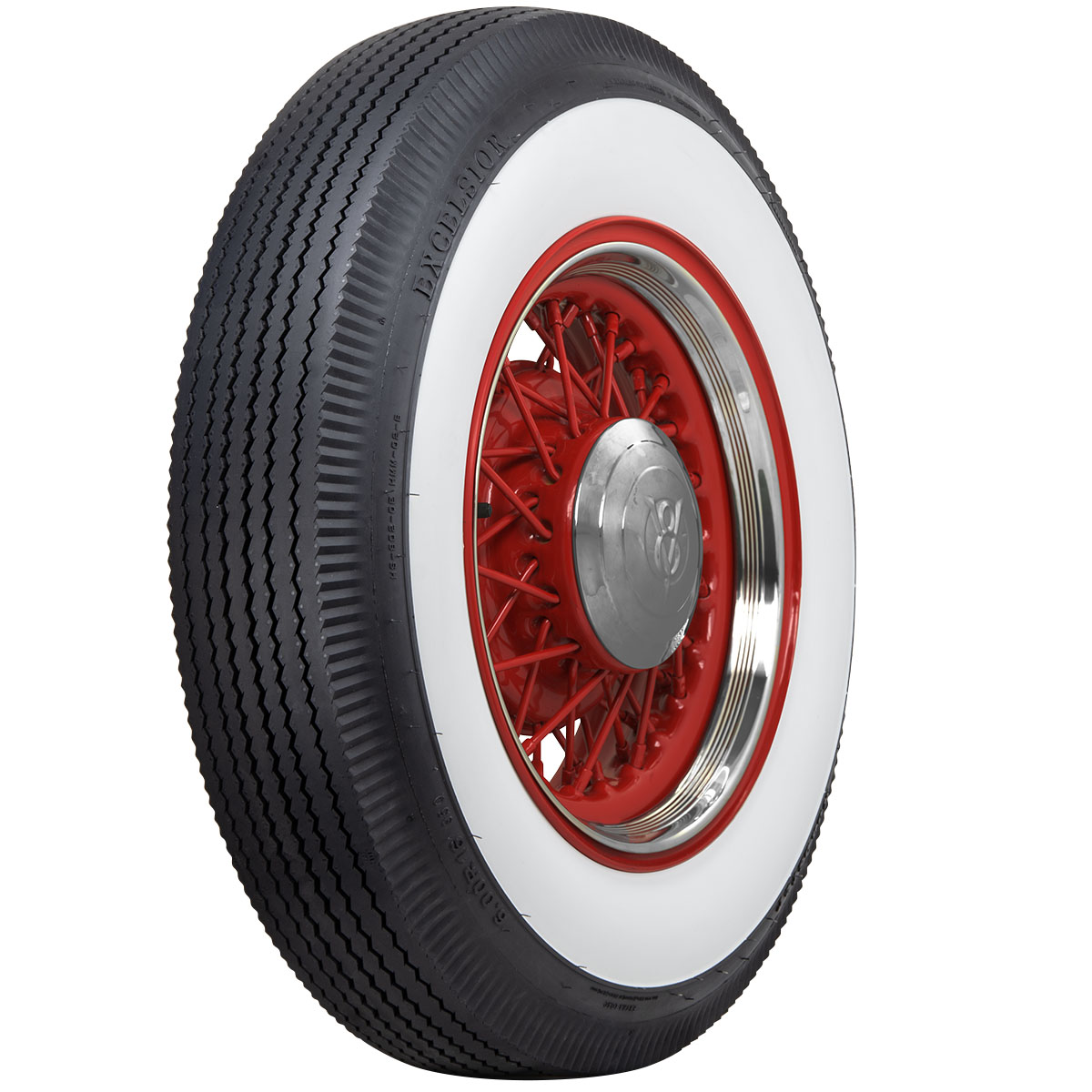

Excelsior Vintage Tires
Excelsior Vintage Tires and Excelsior Vintage Race Tires feature vintage race designs in DOT approved tires that are excellent for restored race cars, hot rods and custom builds. The Excelsior Stahl Sport Radial is an incredibly popular vintage race-styled tire with a completely modern radial tire construction inside. The Stahl Sport Radial is extremely popular with hot rodders who love to drive their cars, both for their stylish good looks and for their long-wearing performance on the road.
Ever Upward!
Frequently Asked Questions
Purchase Considerations ▼
Will Excelsior Vintage Tires work with my existing wheel setup? ▼
Excelsior Vintage Tires are available in a range of sizes and constructions for different classic and collector vehicle applications. The product range includes traditional bias ply tires, the Stahl Sport Radial, and the Roadster bias look radial. However, compatibility with your existing wheels depends on the specific tire size, rim diameter, and approved rim width. These details should be checked against the specifications of the exact Excelsior model you intend to purchase.
Also account for the fact that published tire dimensions can vary with rim width and inflation pressure. Confirm your wheel measurements before selecting a tire rather than relying on the appearance or size designation alone.
Are there any fender or suspension clearance considerations with Excelsior Vintage Tires? ▼
Excelsior Vintage Tires cover different sizes and profiles, so clearance depends on the particular model selected. Overall diameter and section width influence how much room the tire needs inside the wheel opening. A change in either measurement can affect fender clearance, suspension clearance, and the vehicle's overall stance. This is especially important on hot rods and custom builds with altered ride heights or wheel positions.
Check clearance with the wheels turned fully in both directions and the suspension compressed. Also consider any changes to wheel offset, steering components, or suspension geometry. Since published dimensions can vary with rim width and inflation pressure, verify actual fitment before installation.
Will Excelsior Vintage Tires affect my vehicle’s speedometer accuracy? ▼
Excelsior Vintage Tires may affect speedometer accuracy if their overall diameter differs from that of your vehicle's current tires. A larger-diameter tire travels farther with each rotation, while a smaller-diameter tire travels a shorter distance. As a result, the speedometer may display a reading that differs from your actual road speed. The amount of change depends on the difference between the original and replacement tire diameters.
Excelsior offers multiple sizes across its bias ply and radial ranges, so there is no single diameter that applies to the entire product line. Compare the published overall diameter of your selected tire with your current setup before purchasing. Keep in mind that actual dimensions can vary with rim width and inflation pressure.
Should I choose an Excelsior radial or bias ply tire for a vehicle that has been modernized? ▼
The choice depends on how you intend to use your modernized vehicle. Excelsior bias ply tires provide an authentic construction associated with traditional classic car restorations and hot rod builds. However, bias ply tires can be more sensitive to pavement grooves and road irregularities. For drivers who want a vintage appearance with a more modern driving experience, the Excelsior Roadster Radial uses bias look radial construction, while the Stahl Sport Radial offers radial performance with a vintage-inspired tread design.
Consider your driving frequency, handling expectations, and desired appearance before deciding. Check the exact model's size, load capacity, and speed rating to ensure it suits your vehicle and intended use.
Brand Identity & Legacy ▼
What era of vehicles are Excelsior tires most closely linked to? ▼
Excelsior tires are most closely linked to pre-war vehicles, including brass-era cars, 1920s touring cars, and 1930s performance models. These vehicles were originally equipped with bias ply tires featuring tall, narrow profiles and minimal tread width, which Excelsior continues to replicate.
The brand also extends into early racing heritage, making it relevant for vintage competition cars and speed-inspired builds. While modern radial options exist, the overall design language remains rooted in early automotive engineering. This makes Excelsior particularly suited for vehicles where maintaining original proportions and stance is essential to preserving historical accuracy.
Appearance & Styling ▼
Are Excelsior tires suitable for period-correct restorations? ▼
Excelsior tires are widely considered suitable for period-correct restorations, particularly for vehicles from the early 20th century through the pre-war era. Their dimensions, tread patterns, and sidewall proportions closely match original equipment specifications.
Because visual accuracy is critical in concours judging, Excelsior tires are often chosen for their authenticity. Even their radial offerings maintain a bias-look design, ensuring that modern construction does not compromise appearance. This makes them a strong option for restorers who want both historical accuracy and improved drivability.
Are Excelsior tires available in different visual styles? ▼
Excelsior primarily focuses on blackwall styling, which aligns with early automotive and racing traditions. This clean and simple appearance is historically accurate for most vehicles from the era the brand represents.
While modern classic tire brands may offer whitewalls or raised lettering, Excelsior maintains a more restrained design approach. This consistency ensures that the tires remain true to their historical roots, making them especially appealing for restorations where visual authenticity is a priority.
Do Excelsior radial tires look different from bias ply versions? ▼
Excelsior radial tires are designed to closely mimic the appearance of traditional bias ply tires. This includes maintaining similar sidewall proportions and tread patterns, even though the internal construction differs.
The key difference lies beneath the surface, where radial construction improves tread stability and ride comfort. Visually, most enthusiasts will find minimal distinction between the two, which allows builders to upgrade performance without altering the vehicle’s appearance.
Driving Experience, Performance & Construction ▼
What is the difference between Excelsior bias ply and radial construction? ▼
Bias ply Excelsior tires use layered cords that run diagonally across the tire, creating a flexible structure that was standard in early automotive design. This construction produces a softer ride but less stability during cornering.
Radial construction uses cords that run perpendicular to the tread, improving tread stability and heat dissipation. This results in better handling characteristics, longer tread longevity, and improved ride comfort. Excelsior offers both options to accommodate different restoration goals and driving expectations.
Are Excelsior tires built with modern materials? ▼
Yes, Excelsior tires use modern rubber compounds and manufacturing processes to improve durability and safety. Even bias ply versions benefit from updated materials that enhance performance compared to original vintage tires.
Radial models take this further by combining modern construction techniques with vintage styling. This improves heat dissipation, tread longevity, and overall reliability, making them suitable for today’s driving conditions while preserving a period-correct appearance.
Vehicle Applications ▼
Are Excelsior tires suitable for hot rods? ▼
Excelsior tires are popular in traditional hot rod builds, especially those inspired by early racing and dry lakes styling. Their narrow profile and tall sidewalls complement the minimalist, vintage aesthetic of these builds.
Radial options like the Stahl Sport are particularly favored by hot rodders who drive their vehicles regularly. They provide improved handling characteristics while maintaining the classic look that defines traditional hot rod culture.
Do Excelsior tires work well on vintage race cars? ▼
Excelsior tires are specifically designed to suit vintage race cars, both visually and functionally. Their tread patterns and proportions reflect early racing tires, making them ideal for historically accurate restorations.
Modern radial versions also provide improved drivability, allowing vintage race cars to be driven safely on public roads. This makes them a practical choice for enthusiasts who want both authenticity and usability.
Are Excelsior tires appropriate for classic trucks? ▼
Excelsior tires can be used on early classic trucks, particularly those from the pre-war era that originally used similar tire designs. Their tall sidewalls and narrow tread widths align with early truck specifications.
However, for later trucks that require wider tires and higher load capacity, other tire types may be more appropriate. Excelsior is best suited for vehicles that match its historical design parameters.
Maintenance & Ownership ▼
How should Excelsior tires be maintained for long-term use? ▼
Regular inspection, proper inflation, and periodic rotation are essential for maintaining Excelsior tires. Keeping the tires clean and storing the vehicle properly also helps prevent premature aging.
For vehicles that are not driven frequently, maintaining correct storage conditions can extend tire life. Avoiding prolonged exposure to sunlight and extreme temperatures is particularly important.
Are Excelsior radial tires easier to maintain than bias ply? ▼
Radial Excelsior tires are generally easier to maintain due to their more stable construction and even wear patterns. They are less sensitive to minor alignment and inflation variations.
Bias ply tires require more attention to maintain optimal performance. Their construction makes them more prone to irregular wear if not properly maintained, especially under modern driving conditions.