

FEATURED NEW PRODUCTS


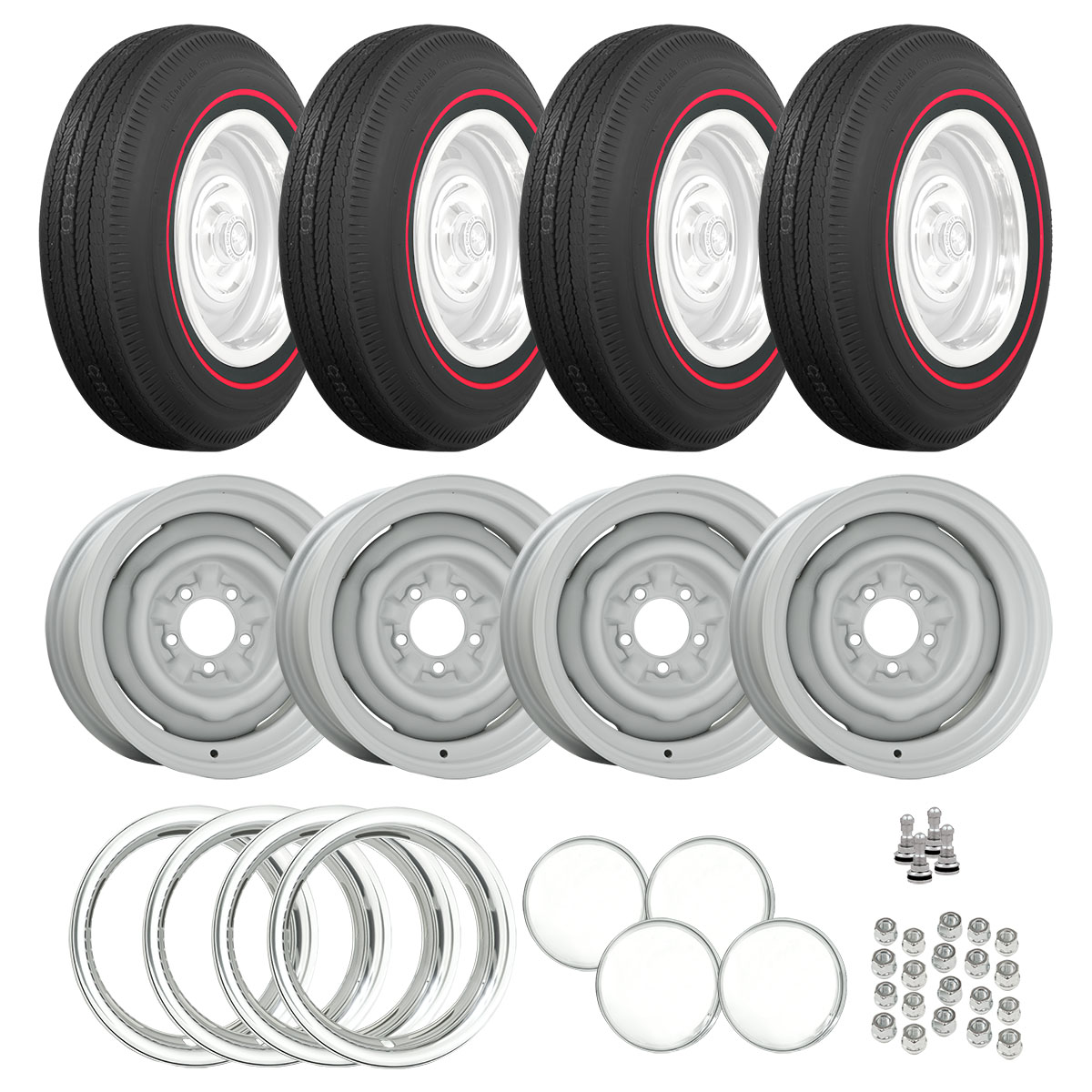


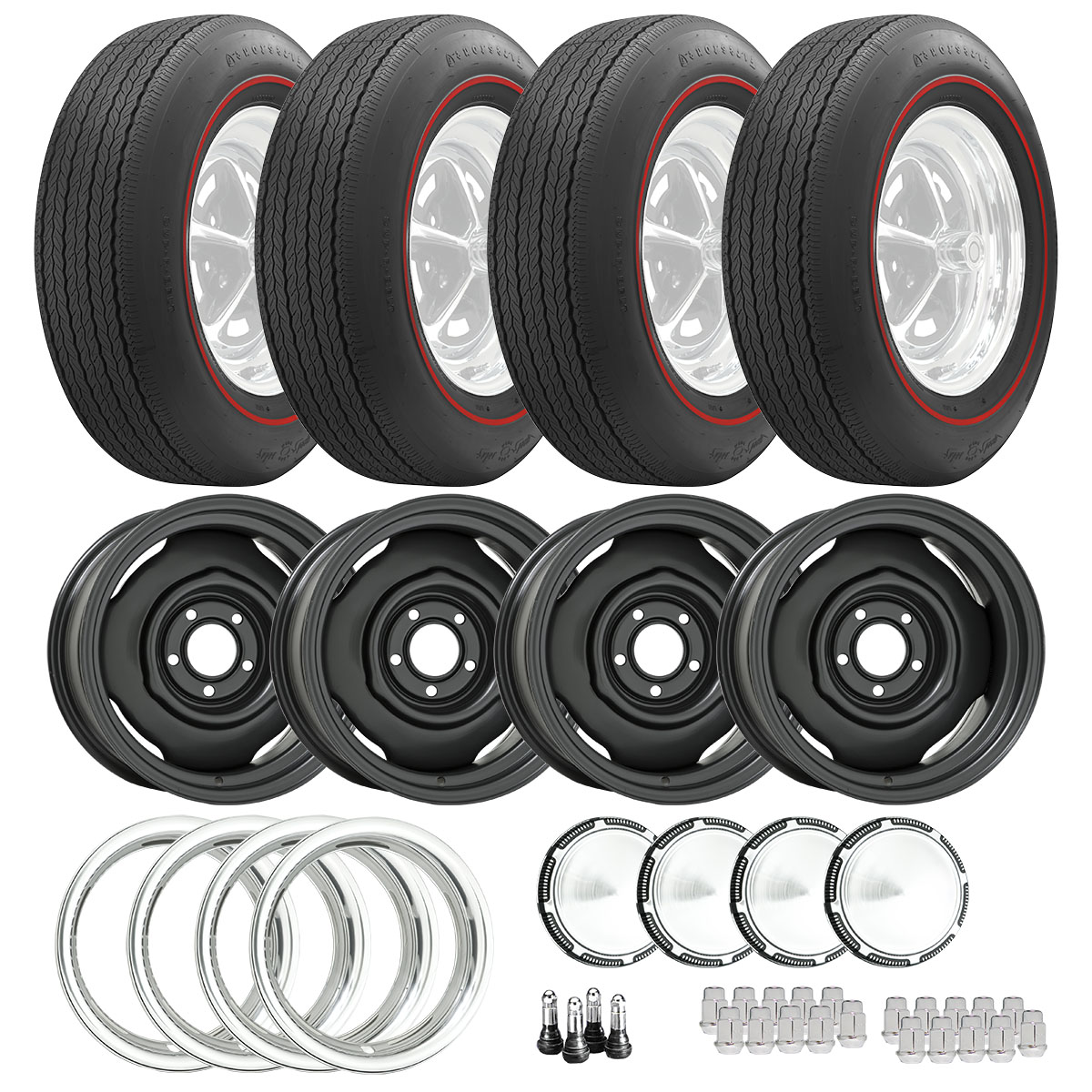

Genuine Redline Tires
Nothing says muscle car quite like a set of redline tires from the world's leading supplier of collector tires and wheels. Redline tires are available in traditional bias ply or radial construction for many popular applications. Whether it's an authentic restoration of a splash of color to your custom ride, redline tires are an excellent choice from our premium selection of collector tires.
Equally at home on optioned-up muscle cars with disc brakes and air conditioning as they are on stripped down sleepers, Redline tires add attitude and authentic style to the hero cars of the sixties and seventies.
Frequently Asked Questions
Appearance & Styling ▼
What types of vehicles typically use redline tires? ▼
Redline tires are most closely associated with 1960s and early 1970s American muscle cars. They were often optional equipment on performance-oriented models equipped with disc brakes, upgraded suspension, or factory sport packages.
They also work well on period-correct restomods and certain vintage trucks that lean toward a performance aesthetic. While less common on pre-1960 vehicles, they can suit late 1950s performance builds. Their styling is strongly tied to the muscle car era rather than luxury or early classic segments.
Are redline tires available in both radial and bias ply construction? ▼
Yes. This redline tire category includes traditional bias ply construction as well as modern radial versions. Bias ply tires replicate original factory appearance and sidewall profile common in the 1960s.
Radial redline tires maintain the same visual stripe but use modern internal construction. Radials typically offer a flatter contact patch and improved road manners. Buyers choosing between them are balancing historical authenticity with drivability expectations on modern highways.
Are redline tires appropriate for restomod builds? ▼
Yes, particularly when the build retains classic muscle car cues but incorporates modern drivability. Radial redline tires allow builders to maintain period styling while improving handling characteristics.
However, aggressive brake upgrades or large diameter wheels may shift the vehicle away from traditional redline proportions. Builders should consider the relationship between brake clearance, wheel width compatibility, and sidewall height before finalizing the aesthetic direction.
Ride, Durability & Performance ▼
How do radial redline tires differ in driving feel from bias ply versions? ▼
Radial construction provides a more flexible sidewall and a flatter contact patch. This typically improves ride comfort and straight line stability.
Bias ply tires have stiffer sidewalls and a more rounded tread profile. They can feel firmer and may wander slightly on uneven pavement. For drivers accustomed to modern vehicles, radial versions often feel more predictable in daily use.
How do load rating and speed rating factor into selection? ▼
Load rating indicates the maximum weight the tire can safely support. It must match or exceed the vehicle’s axle weight. Speed rating reflects safe sustained operating speed capability.
Classic muscle cars with upgraded engines may require higher speed ratings than factory specifications. Matching these ratings ensures durability and heat management under real world driving conditions.
Do redline tires require special break-in or heat cycling? ▼
New tires benefit from moderate driving during initial use. This allows tread surfaces to stabilize and internal components to settle.
Aggressive driving immediately after installation is not recommended. Proper heat cycling improves longevity and ensures consistent contact patch performance. This is particularly important for bias ply construction, which can be more sensitive during early use.
Fitment and Compatibility ▼
How do I choose the correct rim diameter? ▼
Rim diameter must match the wheel size stamped or specified for your vehicle. Redline tires in this category are available across multiple common classic diameters.
Maintaining original rim diameter helps preserve intended stance and brake compatibility. Switching diameters requires evaluating overall diameter and backspacing to prevent clearance issues.
What is section width and why does it matter? ▼
Section width measures the tire’s widest point from sidewall to sidewall. It affects stance, clearance, and steering feel.
Choosing a width too large for the wheel can distort sidewall profile. Proper wheel width compatibility ensures correct tread contact and avoids premature wear.
Do redline tires work with wider aftermarket wheels? ▼
They can, provided the wheel width falls within recommended compatibility ranges. Excessively wide wheels stretch sidewalls and alter contact patch behavior.
Maintaining correct wheel width ensures proper tread wear and handling characteristics. Stretching or excessive bulge can compromise durability and aesthetics.
Authenticity and Period Correct Styling ▼
Are redline tires factory correct for late 1960s muscle cars? ▼
Yes, many American performance models from the mid to late 1960s offered redline tires as optional equipment. They were especially common on high performance trims.
Bias ply redline tires most closely replicate original factory appearance. Radial versions maintain visual authenticity while improving drivability.
Do redline tires suit period-correct restorations? ▼
For vehicles originally equipped with redlines, they are essential to accurate restoration. Stripe placement and sidewall profile influence authenticity.
Selecting correct construction type is important. Bias ply offers period accuracy, while radial offers practical drivability with authentic appearance.
Are redline tires appropriate for modern muscle restomods? ▼
They can work well when the build references classic cues. Radial construction allows improved handling characteristics.
However, extreme wheel diameters and low aspect ratios may visually conflict with traditional redline proportions. Balance is key.
Maintenance and Longevity ▼
How should redline tires be cleaned? ▼
Use mild soap and water with a soft brush. Avoid harsh solvents that may discolor the stripe.
Regular cleaning prevents staining and preserves visual contrast. Dedicated tire cleaners safe for colored sidewalls are recommended.
How important is correct inflation pressure? ▼
Proper inflation preserves contact patch integrity and prevents uneven wear. Overinflation reduces grip and ride comfort.
Underinflation increases heat buildup and sidewall stress. Radial and bias ply constructions respond differently to pressure changes, making regular checks important.
How long do redline tires typically last? ▼
Longevity depends on driving habits, alignment, and inflation. Radial versions generally offer longer tread life under normal use.
Classic vehicles driven seasonally may age out before wearing out. Monitoring tread depth and sidewall condition is essential.