

Bias Ply Tires
It wasn't until the 1970s that radial tires began to takeover as the dominant tire construction type for American automobiles. Before that, the classic bias ply design was used on all cars, trucks and motorcycles from the 1930s, 1940s and 1950s. The vintage look and feel of authentic bias ply tires is available today from Coker Tire Company. Our classic bias ply tires are faithfully produced in refurbished original molds or in new molds carefully engineered from original technical drawings. Popular tire brands of the era such as BF Goodrich, Firestone, US Royal and more are now available complete with authentic tread and sidewall designs. Restorations, period-correct customizations, as well as movie car builders all depend on authentic tires and wheels from Coker Tire Company.
-
 Avon Super Safety | 640H15 83H$384.00
-
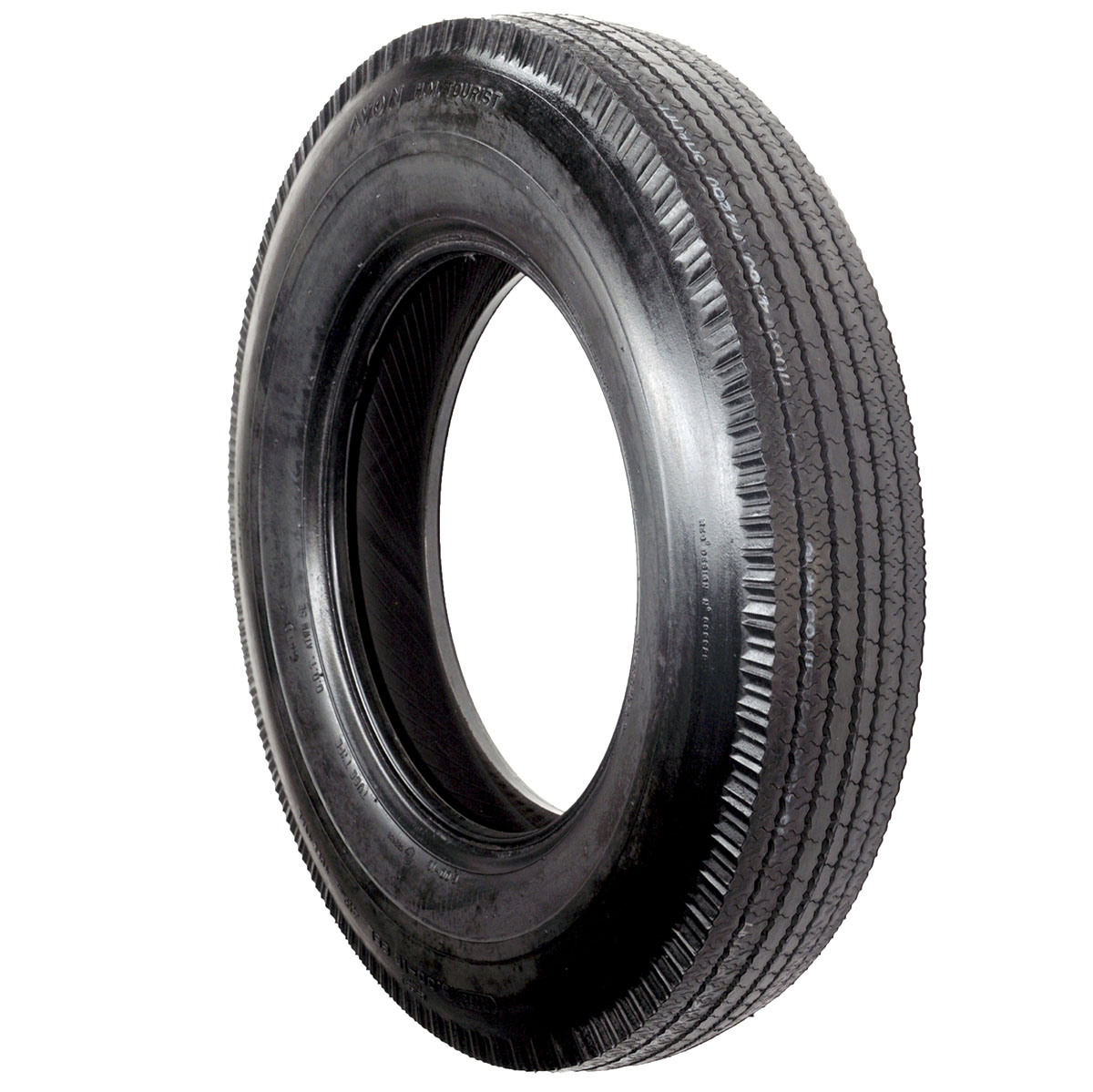 Avon Tourist | 550-16 80L$352.00
-
 Avon Tourist | 600-16 86L$358.00
-
 Avon Turbospeed | 590H15 81H$375.00
-
 Avon Turbospeed | 600H16 93H$433.00
-
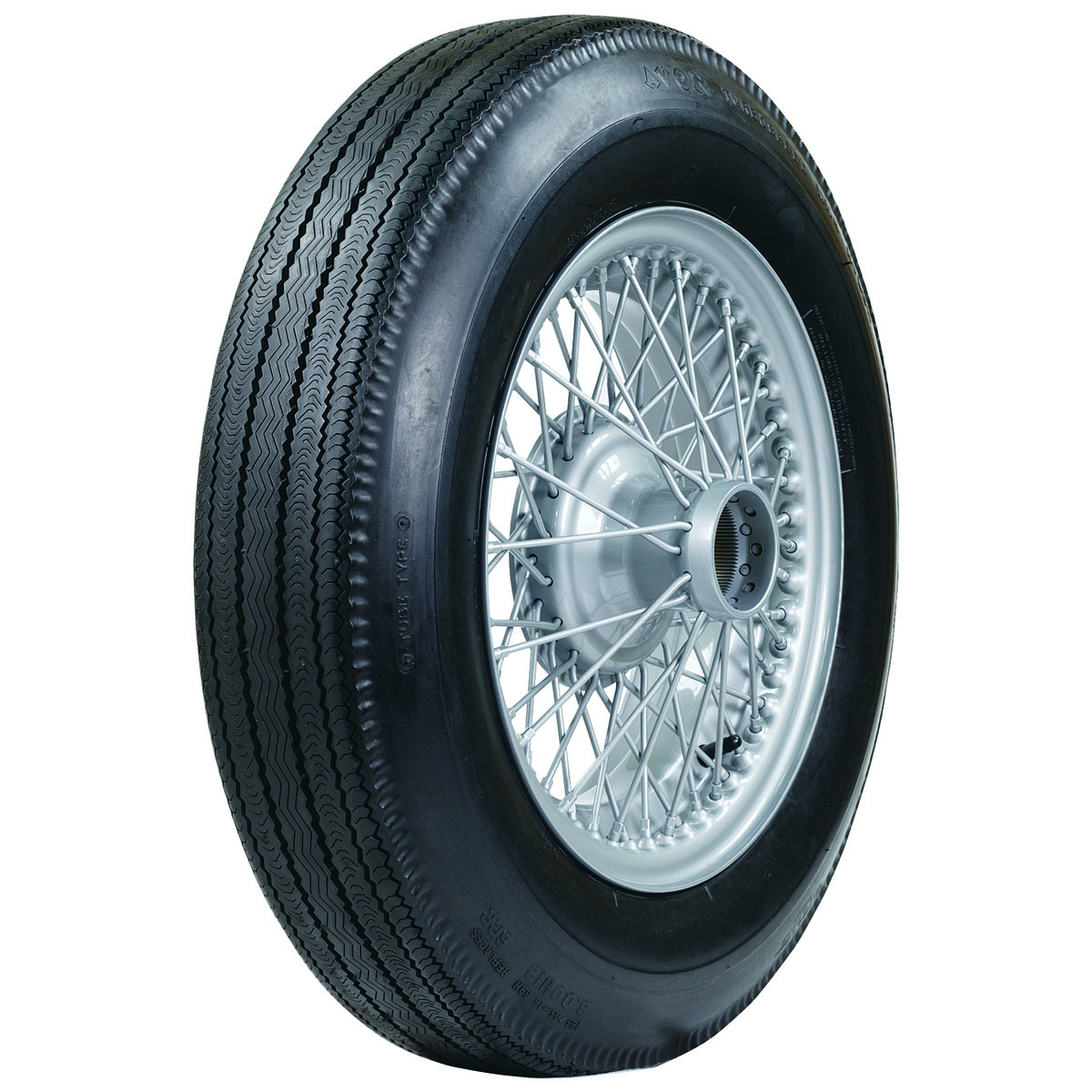 Avon Turbospeed | 670H15 91H$427.00
-
 Avon Turbospeed | 670H16 89H$480.00
-
 Avon Turbospeed | 820H15 102H$749.00
-
 Avon Turbospeed | 890-15 110S$693.00


When Authenticity Counts
Our bias ply tires are excellent for accurate restoration projects. Coker Tire Company is the world's leading supplier of tires and wheels for collector vehicles.
Wide whitewall tires have always been associated with deluxe or upgraded trim level vehicles. The bright sidewalls complement wheel caps and contrast sharply with black rubber. So many classics from the 1940s and 1950s owe part of their trademark good looks to the elegant wide whitewall bias ply tires specific to the era. Coker Tire Company is the world's leading supplier of authentic wide whitewall tires. Coker offers many popular brands of wide whitewall tires from Firestone, BF Goodrich and others featuring authentic tread patterns and sidewall styles.
As cars continued getting larger with huge displacement engines, the whitewalls on their tires began to shrink. Instead the massive whitewalls of the the 1940s and 1950s, the sidewall styling morphed into more of an accent and in some cases even a white pin stripe in the 1960s and into the 1970s. Coker Tire Company offers a huge selection of narrow whitewall tires for Cadillacs, Lincolns and many passenger cars that originally wore the narrower whitewall style.
The broad-shouldered cars of the late 1960s and early 1970s were in an arms race. Style and horsepower were just as important as reputations on the race track. In the fierce battle for sales, the muscle cars and sports cars of the era added more and more <em><strong>sport</strong></em> into their offerings. The raised white letter bias ply tires of the time have become synonymous with the cars. Such legendary marques as the Firestone Wide Oval offered by Coker Tire Company, define one of the fastest growing segments of collector cars today. Accurately restored muscle cars have been setting records at the auction block in recent years.
The muscular styling of the bias ply redline tire stands as an icon of the horsepower wars of the 1960s and into the 1970s. Coker Tire Company offers a huge selection of muscle car tires with authentic tread and sidewall designs, featuring legendary redline tires from Firestone, BF Goodrich and US Royal. White tire smoke and redline tires is about as patriotic as you can get!
Classic dual redline tires are an excellent fitment for Ford Mustangs of the 1960s and many other popular muscle cars. Taking redline style to another level, the unique styling of dual redline tires if the perfect compliment for you classic muscle car. Available in 14 " sizes from US Royal and BF Goodrich from Coker Tire Company, the world's leading supplier of authentic muscle car wheels and tires.
The classic styling of goldline tires on Corvettes is available now from Coker Tire Company. These bias ply tires feature authentic tread designs and are accurately constructed as true goldline sidewall tires, the same way they were originally built. Firestone goldline tires are available in 14 and 15 " sizes and an excellent tire choice for restored or survivor classic Chevrolet Corvettes.
The style of the BF Goodrich 775-14 Blueline tire is unmatched. These bias ply tires feature authentic details including tread design and sidewall markings.
The classic looks of blackwall bias ply tires are in style again. The deluxe appearance of whitewall tires has been preferred by restorers for many years, but today many people are restoring their cars and truck to the condition that they would have actually been found in back in their day. Restorers are more and more, seeking the most accurate details for their projects. Researching vintage photographs accurately portrays classic cars and trucks as they actually were, which quite often was wearing blackwall tires. Coker Tire offers a huge selection of blackwall bias ply tires for classic cars and trucks.
All white bias ply tires are the incredible icing on the cake for restored antique cars and trucks. These tires feature authentic tread designs, accurate sidewalls marking and are carefully constructed of premium bright white rubber compounds. Vintage white tires speak to an era of fantastic style, the golden age of motoring. White rubber tires are available in many sizes and tread patterns from the world's leading supplier of collector tires and wheels. Concours restorations, museums and private collectors depend on the Tire Experts of Coker Tire Company for accurate and authentic fitments for their priceless vehicles.
Contact a Tire Expert for assistance in selecting the correct whitewall width for your vehicle.
Life of Tread Warranty
Our tires are guaranteed to be free from defects in workmanship and materials for the life of the tread, some exclusions apply. Adjustment is made on a prorated basis (you pay for tread wear used). We are not responsible for tire and tube failure due to improper mounting, mechanical failure, or improper alignment of the vehicle. Coker Tire does not offer any guarantee of fitment for any particular purpose and limits its liability to the purchase price of the item. All tires and tubes should be installed by properly trained individuals. Warranty returns also require an RMA number. Some exclusions apply.
Our Life of the Tread Warranty is the best in the industry.
Frequently Asked Questions
Appearance & Styling ▼
What defines the classic look of bias ply tires compared to modern radials? ▼
Bias ply tires are built with crisscrossed body plies, which creates a taller, rounder sidewall profile and a more vintage “shoulder” shape than most modern radials. That sidewall profile is a big part of why bias ply tires look right on pre-1970s cars, trucks, and motorcycles.
On a Product Listing Page like this, styling cues matter as much as function. Bias ply tires also tend to show period-correct sidewall markings and tread aesthetics, especially in lines inspired by original molds and technical drawings from the era.
What sidewall styles are available in bias ply tire category? ▼
This bias ply tire category includes multiple sidewall styles tied to distinct eras and trims: wide whitewall, narrow whitewall, blackwall, and specialty looks like raised white letters, redlines, dual redlines, goldlines, bluelines, all white, and double whitewalls.
Each style signals a different “factory correct” or period-custom direction. Wide whitewalls read 1940s–1950s deluxe, narrow whitewalls move toward 1960s–1970s, and raised white letter and redline styling aligns strongly with late 1960s and early 1970s muscle and sports car aesthetics.
How do wide whitewalls versus narrow whitewalls change the overall visual stance? ▼
Wide whitewall bias ply tires create a high-contrast, upscale appearance that visually emphasizes wheel covers and brightwork. They tend to “lighten” the vehicle’s look and can make the side profile feel more formal and period-luxury, especially for 1940s and 1950s styling.
Narrow whitewalls shift the look toward a later, more restrained accent, including the 1960s and into the 1970s. Because the white area is smaller, the wheel and body lines visually dominate more, which can better match larger cars and evolving trim practices of the era.
Ride, Durability & Performance ▼
What does a bias ply tire feel like on the road compared to a radial? ▼
Bias ply tires typically feel more period-correct in steering response and ride character, with a different kind of sidewall flex than radials. Many drivers describe bias ply tires as having more “float” and less modern crispness, especially on crowned roads and at higher speeds.
That feel is not automatically good or bad. It is a trade-off tied to construction. If your goal is authentic driving dynamics that match 1930s–1960s expectations, bias ply tires can be appropriate. If you want modern stability, a bias look radial category is usually the alternative.
Are bias ply tires suitable for regular highway driving? ▼
Bias ply tires can be used for highway driving, but expectations should match the design era. They may track differently on interstate grooves and crown, and they can be more sensitive to alignment, steering play, and suspension wear than many modern tires.
Long, high-speed runs also introduce heat management considerations. Inflation accuracy matters because underinflation increases heat and wear, while overinflation can reduce contact patch and change ride quality. If the vehicle is mechanically tight and the tires are properly mounted and balanced, many owners use bias ply tires confidently within sensible driving habits.
Can bias ply tires change speedometer accuracy or gearing feel? ▼
They can, because speedometer readings are tied to overall diameter and rolling circumference. If the selected bias ply tire overall diameter differs from what the vehicle is calibrated for, the speedometer can read high or low, and effective gearing can feel slightly shorter or taller.
This is often missed because buyers shop visually first. A taller overall diameter can reduce indicated speed and slightly lower cruise RPM, while a shorter diameter can raise indicated speed and increase RPM. Even small changes can be noticeable on long drives, so overall diameter should be checked as part of the decision.
Do bias ply tires react differently to heat cycling and storage compared to modern tires? ▼
Bias ply tires can be more sensitive to long periods of sitting and to repeated heat cycling, especially on vehicles that are driven seasonally. Flat spotting after storage can occur, and the tire may need some drive time to regain smoothness, depending on conditions and inflation.
Heat cycling also matters for how the tire feels after repeated drives. Consistent inflation and avoiding prolonged underinflation help manage heat buildup. For collector cars, proper storage practices, correct tire pressure, and avoiding long-term load in one position are practical steps that support ride consistency and longevity.
Fitment and Compatibility ▼
What types of vehicles are bias ply tires typically designed for in this category? ▼
This bias ply tires category is broadly aligned with vehicles that originally used bias ply construction before radials became dominant in the 1970s. That includes many cars, trucks, and motorcycles from the 1930s, 1940s, 1950s, and into the 1960s, plus period-correct muscle and sports car applications.
The page also signals fitment intent through styling groupings: wide whitewalls for 1940s–1950s classics, narrow whitewalls moving into the 1960s–1970s, and raised white letter and redline styles for late 1960s and early 1970s performance segments. Fitment still depends on dimensions and wheel specs.
Will bias ply tires fit without modifications on most vintage builds? ▼
Often they will, when you match the dimensions the vehicle and wheel were designed around. Many restorations and period-correct builds use bias ply tires specifically because they replicate original proportions and sidewall shape, which tends to support stock clearance and intended stance.
However, clearance is not only static. Suspension compression clearance matters during turns, bumps, and braking. A tire that clears in the garage can rub under load if overall diameter or section width is increased. Checking clearances at full steering lock and through suspension travel is a practical step for confident fitment.
Do bias ply tires require tubes, and how does that affect compatibility? ▼
Some bias ply tire and wheel combinations are designed for tube-type use, while others may be compatible as tubeless depending on the tire design and wheel condition. On vintage wheels, bead seat condition and sealing surfaces matter, and older wheels may not be ideal for tubeless sealing without proper preparation.
Tube use introduces additional installation considerations, including proper sizing, correct valve stem type, and careful mounting to avoid pinching. Tubes can also influence heat management at sustained speed. Because this page covers many eras and vehicles, confirming whether your wheel and tire setup is intended for tubes is a key compatibility step.
What installation and balance considerations are most common with bias ply tires? ▼
Bias ply tires can be more sensitive to balance and roundness perception because they transmit road feel differently than many modern tires. Proper mounting technique, correct bead seating, and careful balancing help reduce vibration and improve highway comfort.
Also consider wheel condition, especially on restored steel wheels. Bent rims, worn wheel bearings, and loose steering components can be misdiagnosed as “tire issues” when using bias ply tires. A solid mechanical baseline is important. After installation, a short re-check of air pressure and lug torque is smart, especially for vehicles that sit between drives.
Authenticity and Period Correct Styling ▼
Why are bias ply tires considered the authentic choice for many restorations? ▼
Bias ply tires were the original construction used on most American automobiles before radials took over in the 1970s. That means they match the engineering context and the driving and visual cues of the 1930s through 1960s, especially for concours-style restorations and period-correct customizations.
Authenticity is not only construction. Sidewall markings, tread aesthetics, and the “shape” of the tire on the wheel contribute to an accurate look. This category emphasizes faithful reproduction using refurbished original molds or new molds engineered from original technical drawings, which supports historically accurate presentation for collectors and builders.
How do tread and sidewall details influence judged authenticity without getting overly niche? ▼
Tread pattern and sidewall markings are the “close-up proof” that a tire belongs on the vehicle. Even when a buyer is not building a concours car, correct-looking sidewall typography and period-correct tread aesthetics influence overall credibility at shows and in photos.
You do not need to chase obscure micro-variants to benefit. Focus on the big authenticity levers: correct construction type, correct sidewall style, and a visually appropriate profile. Since this Product Listing Page highlights reproduction based on original molds and technical drawings, the category intent is to deliver historically accurate details that satisfy most authenticity expectations.
Do specialty styles like goldline and blueline have specific period associations? ▼
Yes. Goldline bias ply tires are commonly associated with classic Corvette styling, where the gold stripe complements the car’s premium sport identity. Blueline styling is also strongly signature-driven and tends to be chosen because it recreates a very specific period look rather than serving a broad, generic purpose.
These specialty styles are best treated as authenticity tools. If the vehicle and era historically align with the stripe treatment, the result looks intentional and “right.” If the style is applied outside its natural context, it can look costume-like. Period association is the deciding factor more than performance.
Maintenance and Longevity ▼
What basic maintenance keeps bias ply tires safe and consistent? ▼
Start with correct inflation pressure checks, done regularly, because bias ply tires can be more sensitive to pressure changes in how they ride and wear. Consistent pressure supports contact patch stability, reduces heat buildup, and helps prevent uneven wear on older suspensions.
Also, inspect for visible cracking, damage, or embedded debris, especially if the vehicle sits for long periods. Many collector vehicles see intermittent use, so pre-drive walkarounds matter. Keeping the tires clean and stored away from chemicals and direct sunlight helps preserve sidewall appearance, whether you have blackwalls, whitewalls, or specialty stripe styles.
How should I clean wide whitewalls, narrow whitewalls, and all white bias ply tires? ▼
White rubber sidewalls benefit from gentle, routine cleaning rather than aggressive scrubbing after heavy staining. Use a dedicated whitewall cleaner or mild soap with a soft brush, and avoid harsh solvents that can discolor or dry the rubber. Clean often enough that grime does not become baked in.
For all white bias-ply tires, consistent care is even more important because the entire sidewall is bright. Rinse thoroughly and avoid sling products that can brown the rubber. After cleaning, inspect for scuffs, curb rash, and small cracks. Appearance-focused tires are still structural components, so cosmetic care should pair with safety inspection.
What should I know about warranty expectations and professional installation? ▼
A clear installation baseline matters for longevity and supportability. Professional mounting and balancing reduces the risk of bead damage, tube pinching when applicable, and vibration complaints that are actually installation-related. Many issues attributed to the tire are ultimately traced to wheel condition, alignment, or improper mounting.
This category also references a life-of-tread warranty with exclusions tied to workmanship, materials, and proper use. The practical takeaway is to document installation and maintain the vehicle’s mechanical condition. Avoiding improper mounting, mechanical failure, and misalignment supports both tire life and clarity if a warranty concern ever arises.